
Brazil man recalls father’s harsh lesson on earning love
A photograph of a father handing his daughter a tennis trophy has hung in her living room for years. For most of her life, she saw it as…

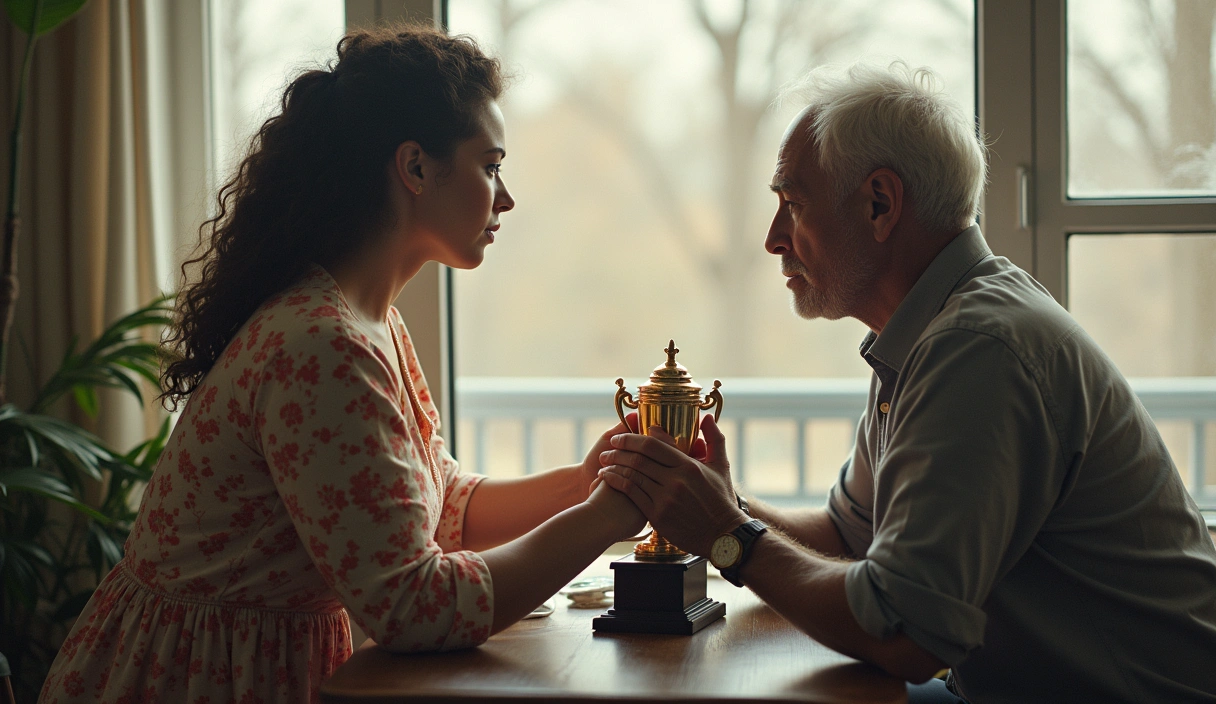
A photograph of a father handing his daughter a tennis trophy has hung in her living room for years. For most of her life, she saw it as proof of his love. She now understands it proved something else.
Her father was a con man. He was charming in public and terrifying in private. He convinced people to give him money for businesses he never started and investments he never made. At home, his behavior was vindictive, violent, and unpredictable. He could beat his children upstairs, smooth back his hair, and rejoin a party downstairs with a grin.
The author learned early that achievement could buy her distance from danger. Good grades, trophies, and obedience became her armor. Her father’s affection came in flashes, almost always with an audience. In front of others, he became a proud, loving father. He would call her over, embrace her, and praise her.
When she was eight, she played in a tennis tournament and took second place. On stage, the announcer called her mother up to hand her the award. Her father pushed her mother back into her seat and presented the trophy himself. The crowd murmured. He did not care. She felt chosen.
She knew his love was conditional. She was being loved for doing something that reflected well on him. She made a bargain: she would keep achieving, and in return, he would keep loving her. The photograph captured that bargain.
As she got older, the photograph changed under her gaze. She began to see her father’s hunger to be seen, her mother being shoved aside, and her own face glowing with relief. What she had called love was, in part, relief that for one moment she was not being ignored or threatened. Hungry children will call many things love.
The real bargain was: make me look good, and I will pretend to love you. This realization reached into her adult life. She saw how often she had chased the feeling that photograph gave her. She mistook approval for intimacy. She mistook being useful for being valued. She mistook scraps for sustenance.
For a long time, she believed that if she became successful enough, the original bargain would pay out. Someone would look at her and choose her completely. That hope was a trap. It kept her working for love instead of receiving it.
Healing began when she stopped asking the photo to testify on her father’s behalf. She stopped asking, “Did he love me?” She started asking, “Why did this moment have to carry so much weight?” The answer was that there was so little else.
She now sees a child doing what children do: making meaning out of whatever tenderness was available. That child deserves compassion, not contempt. Healing is about learning to recognize the old bargain when it shows up again. She pays attention to questions like: Do I feel I have to impress this person to keep their warmth? Do I feel anxious when I am not performing?
When the answer is yes, she tries to pause. First, she names what is happening without shaming herself. Second, she asks whether the connection feels mutual or performative. Third, she reminds herself that worth is not something another person gets to award her. Peace comes from no longer confusing emotional labor with devotion.
